Warehouse Pallet Racking: An Overview
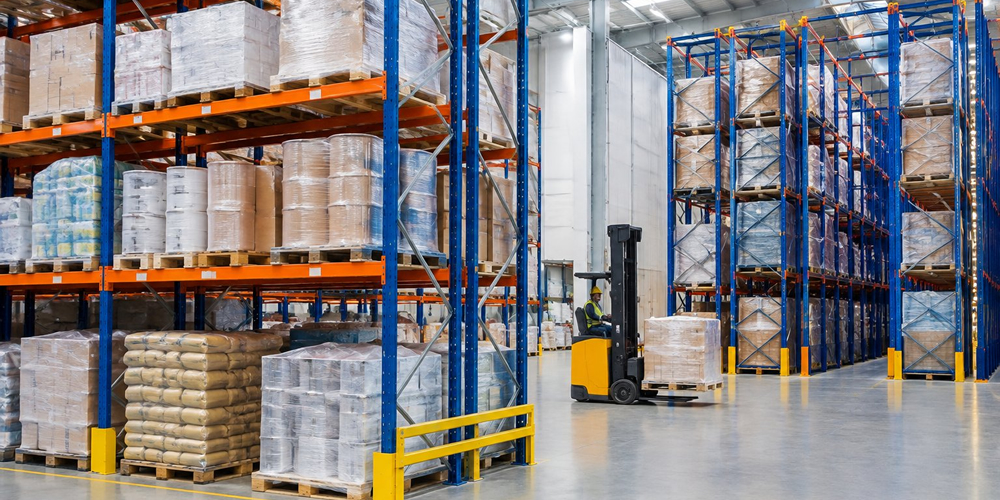
Warehouse pallet racking stores goods on pallets across several levels, helping businesses make better use of floor space and height. The main types of pallet racking include selective racks for direct pallet access, drive-in racks for bulk stock, and pallet flow racks for stock rotation.
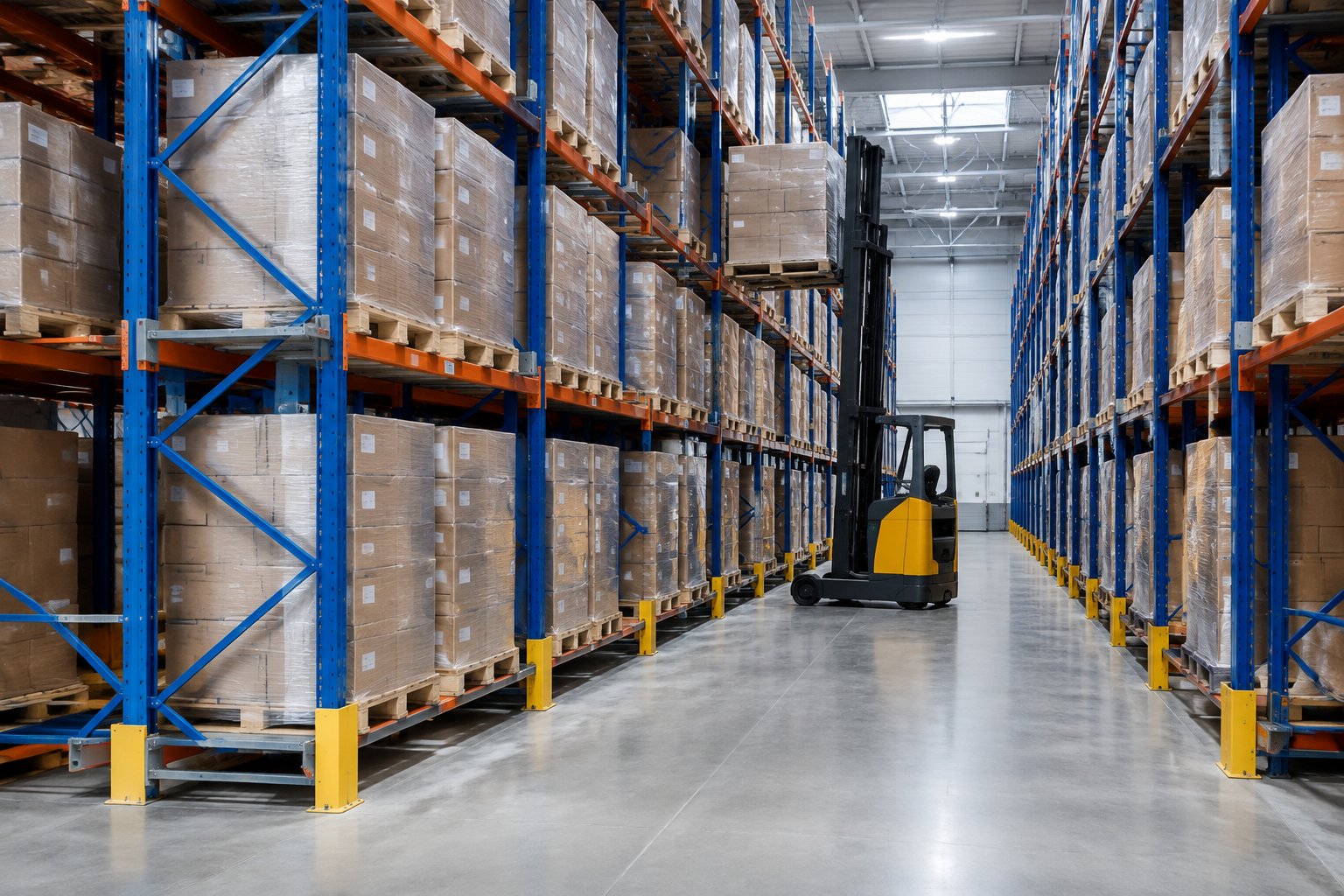
The right choice depends on your product range, stock movement and forklift access. Mobile pallet racking systems suit tight spaces where stock moves more slowly, while automated systems support machine-led storage and retrieval.
Each option comes with different costs, equipment needs and safety checks.
Key Takeaways
-
Match warehouse racking to stock volume, product range and handling needs.
-
Balance storage capacity with pallet access and stock rotation.
-
Include installation, training and inspections in the total cost.
Accessible Storage for Varied Inventories
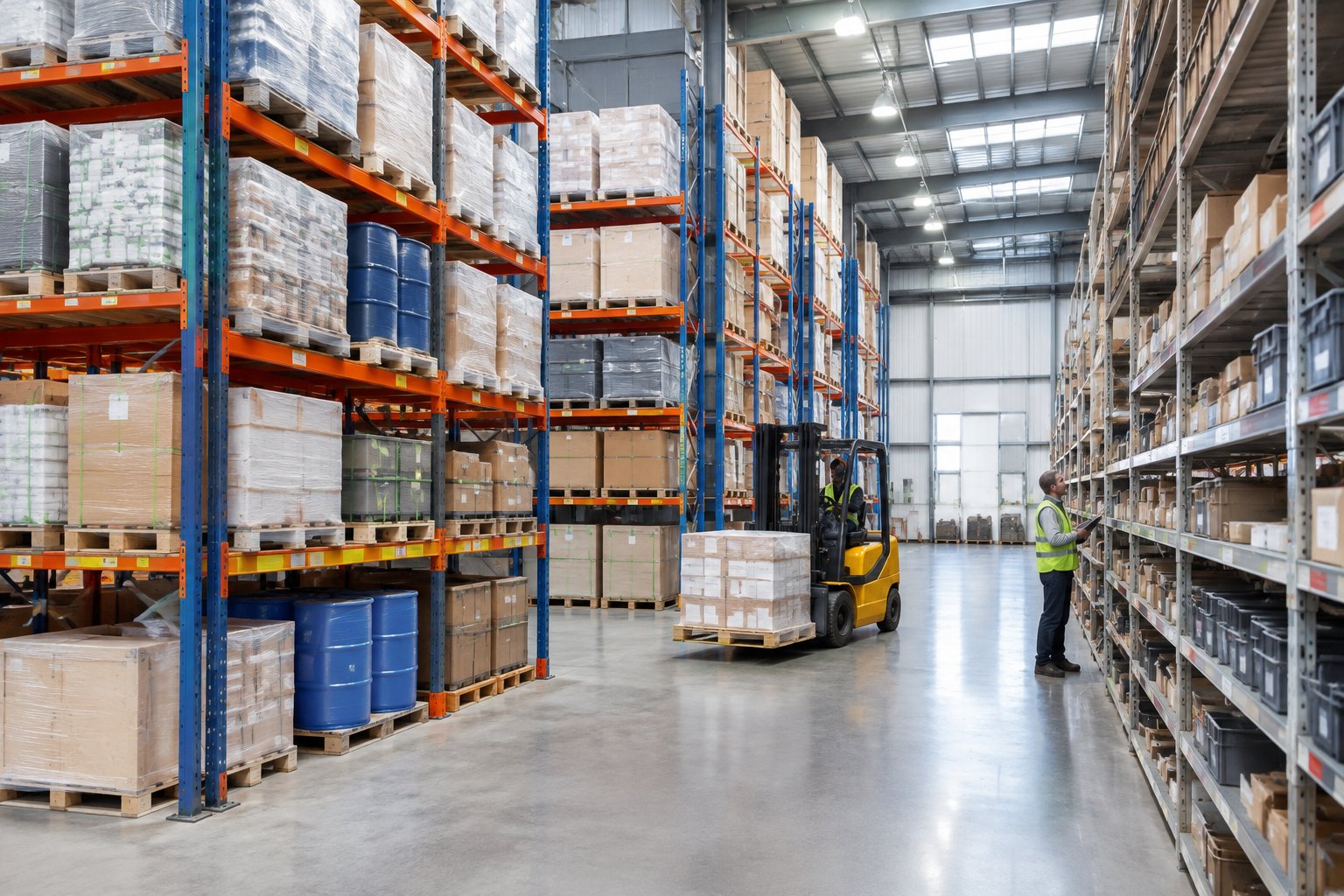
Selective racks give direct access to each pallet, while double-deep layouts store pallets two positions deep. Narrower aisles create more storage space, but require trucks designed for the reduced working width.
Selective Pallet Racking for Direct Access
Selective pallet racking gives forklift operators direct access to every pallet from an aisle. It’s a practical choice for warehouses with high SKU counts, meaning many different product lines, and frequent orders across varied stock.
Upright frames and horizontal beams form each selective pallet rack. Adjustable pallet racking lets staff change beam heights to fit different loads, within the supplier’s approved design and load limits.
This layout works well for:
-
Mixed products with different pallet heights.
-
Frequent picking and stock checks.
-
Stock rotation based on product dates.
Selective pallet racks need aisles between rows, which limits storage density. Still, their easy pallet access suits operations where workers need to retrieve specific goods throughout the day without shifting other pallets.
Double-Deep Racking for Greater Density
Double-deep pallet racking stores pallets two positions deep from the aisle. By reducing the number of aisles, this layout increases storage capacity within the same floor area.
The front pallet blocks access to the rear position, so operators must remove it before retrieving the pallet behind. This makes the layout a good fit for several pallets of the same product grouped together.
Double-deep pallet rack requires equipment that can reach the rear load safely, such as a double-deep reach truck. Truck capacity at full reach and storage height must match the pallet weight.
Within each pair of positions, stock follows a last-in, first-out sequence. Warehouses with fewer product lines and larger quantities per line tend to get more value from this arrangement.
Narrow-Aisle and Very Narrow-Aisle Configurations
Narrow aisle racking places rack rows closer together while preserving direct access to individual pallets. Reach trucks serve these layouts, which suit varied stock in warehouses where floor space limits storage capacity.
Very narrow aisle racking takes aisle width down further and relies on specialist equipment, such as turret trucks. These trucks handle pallets sideways within the aisle, and some systems use rail or wire guidance.
Forklift accessibility depends on the truck model, pallet size and load dimensions. Designers need to confirm:
-
Safe working aisle widths.
-
Floor flatness and condition.
-
Lift height and truck capacity.
Smaller aisles leave more floor area for racks, but planning still needs to account for turning, passing and emergency routes. There must also be enough truck capacity to meet daily order demand.
Deep-Lane Storage for Bulk Stock
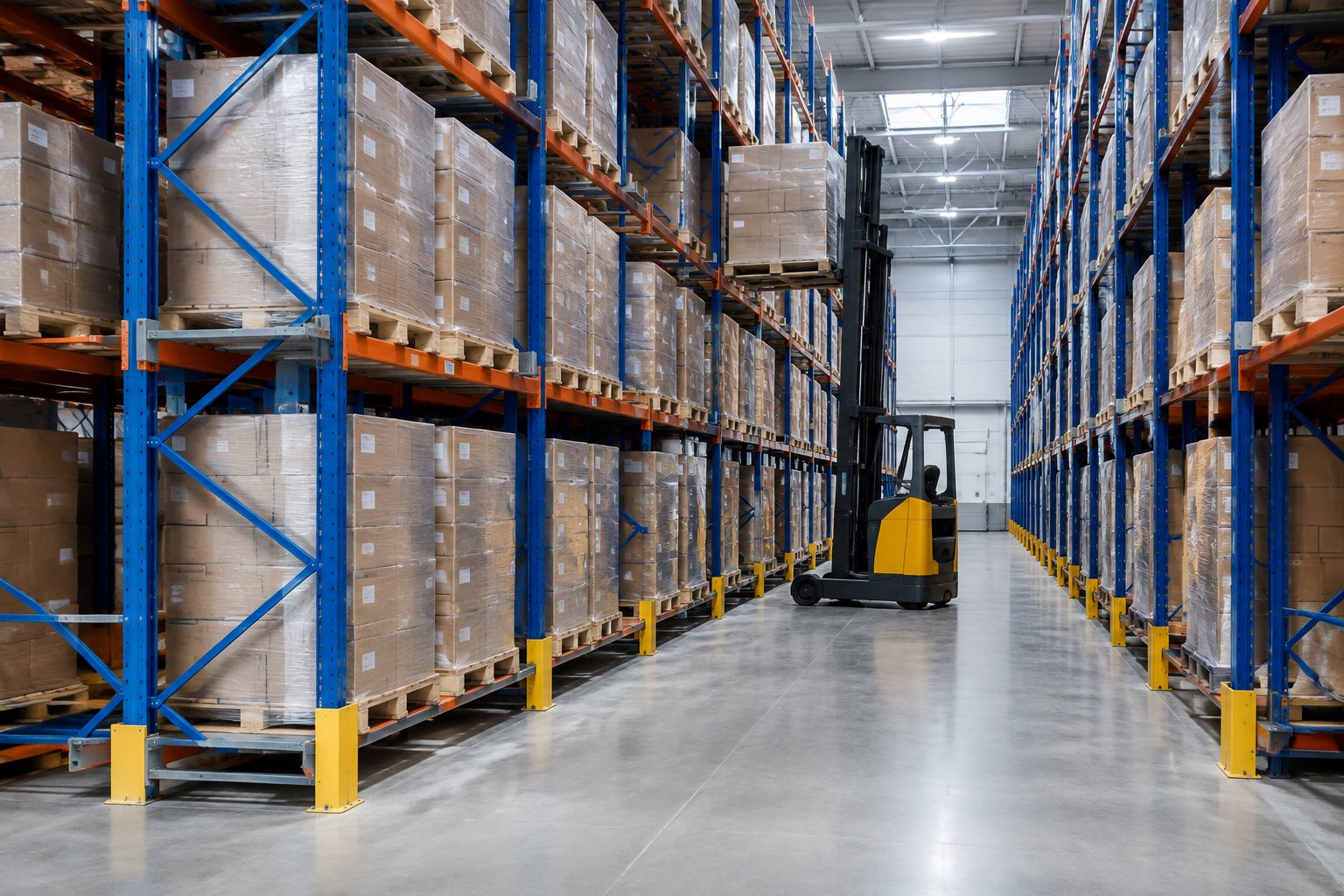
Deep-lane racks store several pallets behind one another, cutting the floor space needed for aisles. Their layout determines forklift access, loading order and stock rotation.
Drive-In Racking for LIFO Storage
Drive-in racking suits bulk stock with many pallets of the same product. Forklifts enter the storage lanes and place pallets on support rails, filling the deepest positions first.
Loading and unloading happen at the same end. This creates last in, first out (LIFO) storage: workers remove the last pallet loaded before reaching earlier stock. Products with long shelf lives are a good fit.
Each lane should hold one product type to limit extra handling. Operators need enough clearance to enter safely, and pallets must match the rail spacing and load limits.
Drive-in pallet racking needs regular checks for impact damage, since forklifts travel inside the structure. Rack guards and clear floor markings help protect uprights at lane entrances.
Drive-Through Racking for Two-Sided Access
Drive-through racking gives forklifts access at both ends of each lane. Workers load pallets from one side and remove them from the other, supporting first in, first out (FIFO) stock rotation when they stick to a set loading order.
This layout suits bulk goods that need regular rotation, including food and drinks. Each lane should hold a single product type to keep retrieval simple and prevent stock from getting blocked.
Drive-through pallet racking needs an aisle at each end. Warehouse planners must allow room for both approaches and check forklift turning clearances.
Forklifts enter the lanes to place and retrieve loads. Consistent pallet sizes, sound pallet bases and trained operators help reduce handling problems and the risk of contact with the rack.
Push-Back Racking for Aisle-Side Handling
Push-back racking stores pallets on wheeled carts that run along sloping rails. When a forklift loads a new pallet, it pushes the pallets already in the lane backwards.
During unloading, gravity moves the remaining pallets towards the aisle. The forklift stays outside the rack, and workers handle every pallet from the same side.
This system follows LIFO storage and suits products held in several pallets per lane. Separate lanes let different product types share a rack level while keeping their stock apart.
Push-back pallet racking needs loads and pallets that match the cart design. Operators must control loading and unloading carefully, and routine checks should cover wheels, rails and stops. Lane depth varies by system, so the design needs to match stock quantities.
Pallet Flow Racking for FIFO Stock Rotation
Pallet flow racking uses sloping roller tracks to move pallets from the loading end towards the picking end. Workers load from one side and unload from the other, giving each lane a clear FIFO route.
Also called gravity flow racking, this system suits dated stock, such as food, drinks and other goods with expiry dates. Lanes commonly hold four to 20 pallets, depending on the design.
Speed controllers regulate pallet movement, while stops hold loads at the picking face. Some systems include separators to reduce pressure on the front pallet during removal.
Reliable movement depends on pallet condition, load weight and roller spacing. Suppliers should test representative loads before installation. Workers also need safe procedures for clearing stalled pallets and checking rollers, brakes and stops.
Mobile and Automated Storage Options
Mobile racking reduces aisle space, while pallet shuttles move loads through deep storage lanes. Automated storage and retrieval systems handle pallet movements, and high-bay racking makes use of additional storage height.
Mobile Pallet Racking for Space-Constrained Facilities
Mobile pallet racking places racks on powered bases that travel along floor rails. The system opens an aisle where staff need access, so several rows can share the same working aisle.
This layout suits warehouses with limited floor space and stock that moves at a moderate rate. Cold stores also use mobile racking to fit more pallets into the area they pay to cool.
The main trade-off is access speed. Forklift drivers have to wait for an aisle to open, and shared aisles limit work in separate rows at the same time.
The floor must support the rack loads and rail system. Safety sensors, emergency stops and access controls help protect workers as the bases move.
Pallet Shuttle Systems for Deep-Lane Handling
Pallet shuttle racking uses a powered cart to carry pallets along rails inside deep storage lanes. In a semi-automated setup, a forklift places pallets at the lane entrance and transfers the shuttle between lanes.
A pallet shuttle system suits large batches of the same product, especially in food, drink and cold storage. Forklifts stay outside the lanes, which reduces travel within the rack structure.
Stock rotation depends on the layout:
-
One-sided access supports last-in, first-out handling.
-
Access at both ends supports first-in, first-out handling.
Each lane normally holds one product type. Planners must check pallet quality, load size, battery charging and how many shuttles will be needed during busy periods. Fully automated pallet shuttle systems connect with lifts and conveyors.
Automated Storage and Retrieval Systems for High Throughput
Automated storage and retrieval systems (AS/RS) use computer-controlled equipment to place and retrieve loads. Pallet systems use stacker cranes or shuttles linked to conveyors and warehouse software.
AS/RS suits sites with steady pallet flows, repeatable tasks and a need for accurate stock tracking. The software assigns storage locations and directs movements between receiving, storage and dispatch.
Peak demand drives system sizing. Designers assess pallet movements per hour, load weights, travel distances and the balance between incoming and outgoing goods. Automation by itself doesn’t determine the handling rate.
These systems require a large initial investment, reliable pallet standards and planned maintenance. Backup procedures and access for repairs help manage equipment stoppages. Warehouse automation also needs clear data links between storage controls and stock records.
High-Bay Configurations for Vertical Capacity
High-bay racking uses building height to increase pallet capacity within a fixed floor area. Automated installations often use stacker cranes to reach upper storage levels through narrow aisles.
In some high-bay warehouses, the racks also support the roof and wall cladding. These structures need specialist design because storage loads, wind and snow all affect the rack framework.
Height brings added design requirements. Engineers assess floor strength, rack stability, fire protection and clearances around stored loads. Tall systems also need precise installation and equipment suited to the planned lift height.
High-bay storage suits sites with limited land and enough pallet volume to justify the cost. Its value depends on usable storage positions, retrieval speed and the space needed for conveyors, maintenance and fire safety.
Specialist Racking and Complementary Picking Systems
Specialised pallet racking supports long loads, while multi-tier layouts add raised picking floors. Carton flow racks bring cases and small items towards pickers for order fulfilment.
Cantilever Racking for Long and Irregular Loads
Cantilever racking stores timber, pipes, steel sections and other loads that need support along their length. Upright columns carry horizontal arms, leaving the front clear for loading. This open design gives forklifts access to goods that extend beyond standard pallet dimensions.
A cantilever pallet rack needs arm lengths, spacing and load ratings that match the stock. Long or flexible goods need enough support to prevent bending, and staff should spread loads across the arms within the supplier’s stated limits.
Single-sided units suit wall positions, while double-sided units allow access from two aisles. The layout needs enough room for trucks to turn safely with long loads. Suitable restraints help keep round goods from rolling off the arms.
Multi-Tier Layouts for Picking Across Levels
Multi-tier racking uses raised walkways and several storage levels to make better use of warehouse height. Pickers reach cartons, bins and loose goods from each floor. This arrangement suits clothing, spare parts and other small-item stock.
A multi-tier pallet rack layout can combine pallet storage with picking areas where the design allows. Industrial shelving also works well in these layouts, especially for hand-picked items. Designers need to account for floor loads, clear heights and the weight of stored goods.
Stairs give staff access, while goods lifts or conveyors move stock between floors. Guardrails, gates and clear escape routes support safe working. Fire protection takes careful planning: raised floors and stored goods affect sprinkler coverage, smoke movement and emergency crew access.
Carton Flow Racks for Case and Item Picking
Carton flow racks use sloping roller tracks to move cartons or plastic totes towards the picking face. Staff replenish stock from the rear and pick from the front. When workers follow the correct loading process, this layout supports first-in, first-out stock rotation.
Separate loading and picking aisles reduce interference between replenishment teams and order pickers. Carton flow racks suit fast-moving products in order fulfilment operations, including food, cosmetics and small parts.
Track spacing, slope and load ratings must suit each container’s size, weight and base. Dividers keep products in their lanes, while stops control their position at the front. Regular checks help remove damaged cartons and debris that could block movement. Where the rack design permits, pallet storage above the picking lanes provides space for reserve stock.
Comparing Density, Access and Stock Rotation
Selective racking gives direct access to every pallet, while deep-lane systems fit more pallets into the same floor area. Stock rotation, forklift needs and handling speed all influence how well that space supports daily work.
Comparison Table of Uses, Access, Equipment and Relative Cost
These pallet racking types suit different stock profiles. Relative costs refer to the rack system per pallet position, excluding trucks and building work.
|
Rack type |
Main use |
Pallet access |
Equipment |
Relative cost |
|---|---|---|---|---|
|
Selective |
Many product lines |
Every pallet |
Standard forklift or reach truck |
Low |
|
Double-deep |
Several pallets per product |
Front pallet blocks rear |
Deep-reach truck |
Low to medium |
|
Drive-in |
Bulk stock with few product lines |
Lane entrance |
Forklift suited to rack lanes |
Medium |
|
Drive-through |
Bulk stock needing two-ended access |
Both lane ends |
Forklift suited to rack lanes |
Medium |
|
Push-back |
Batch storage |
Front of each lane |
Compatible forklift |
Medium to high |
|
Pallet flow |
Fast-moving, dated stock |
Separate loading and picking faces |
Forklift and gravity rollers |
High |
Actual prices depend on rack height, load weight, lane depth and installation needs. Truck costs affect the budget too.
FIFO and LIFO Capabilities Versus Operating Procedures
FIFO (first in, first out) moves the oldest received stock first. Pallet-flow racking supports this sequence within each lane: staff load one end, and rollers move pallets towards the picking face.
Drive-through racking supports FIFO when staff load and unload from opposite ends. Drive-in and push-back systems follow LIFO (last in, first out) within each lane, since staff retrieve the most recently loaded pallet first.
Selective pallet rack systems support either method through direct pallet access. Labels, receipt dates and inventory management software help guide the picking order.
Rack design alone doesn’t enforce stock rotation across separate lanes. Staff still need to select the correct lane and pallet. For expiry-dated goods, picking by earliest expiry date also accounts for deliveries that arrive out of date order.
Storage Density Versus Usable Capacity and Throughput
Storage density measures how closely a layout packs pallets into available space. Usable capacity depends on how well actual stock levels fill those positions.
A six-deep lane holding three pallets uses only half its positions. Keeping each lane for one product leaves gaps as stock falls, particularly across many product lines.
Pallet accessibility also affects throughput, or the number of pallets staff move per hour. Double-deep storage means extra handling to reach rear pallets, while drive-in racks require trucks to enter the lanes.
Warehouse racking systems need enough aisle space, clear travel routes and room for incoming and outgoing loads. Comparing layouts against peak stock, daily pallet movements and forklift limits gives a clearer measure of warehouse efficiency than counting rack positions alone.
Matching the System to Your Warehouse
A warehouse racking system needs to fit the stock range, pallet sizes, load weights and available floor space. Forklift access and location tracking also shape safe, efficient pallet storage.
SKU Counts, Pallets per SKU and Inventory Turnover
The number of stock-keeping units (SKUs), or distinct products, helps determine rack choice. Selective racking gives direct access to every pallet, making it useful for distribution centres with many products and few pallets per product.
Drive-in racks suit larger batches of the same product. Their deep storage lanes reduce aisle space, though mixing products within one lane can mean extra handling when staff need pallets at the rear.
Stock movement matters too. Pallet flow racks support first-in, first-out (FIFO) handling for dated goods. Push-back racks follow last-in, first-out handling and suit stock without strict rotation needs. Seasonal peaks and slow-moving stock also affect how many pallet positions each product needs.
Pallet Dimensions, Load Weights and Pallet Compatibility
Rack design starts with actual pallet dimensions and loaded weights. The assessment must include the goods, packaging and pallet, as well as any load extending beyond the pallet edges.
A standard Euro pallet measures 1,200 × 800 mm. Other pallet types have different sizes, base boards and entry points, which affect beam spacing, support bars and compatibility with rollers or carts.
The load capacity must cover each storage level and the full rack bay. Uneven loads and concentrated weight need specific checks from the rack designer.
Pallet condition matters as well. Broken boards or weak bases create risks, especially where pallets rest on rails or move along rollers. Suppliers should test representative loaded pallets before approving flow or push-back systems.
Warehouse Layout, Aisle Clearances and Forklift Access
The warehouse layout needs to let forklifts turn, lift and place loads safely. Aisle widths depend on the truck model, pallet size and handling task, so planners need the clearance figures from the equipment maker.
Usable storage height depends on roof supports, lights, sprinklers and the forklift’s rated lifting capacity at height. Floor condition, slab strength, rack anchors and fire safety clearances also affect where racks can go.
Material handling equipment must match the storage depth. Double-deep racks require trucks with suitable reach, while drive-in racks need enough clearance for trucks to enter the lanes.
Warehouse storage systems also need clear pedestrian routes, loading areas and emergency exits. These spaces support safe material handling and help reduce congestion around busy rack ends.
Location Tracking and Warehouse Management System Integration
Each pallet position needs a unique address, such as aisle, bay, level and position. Clear labels and barcode scans help staff record where pallets enter, move within the racks and leave.
Warehouse management systems should reflect how each rack works. Drive-in lanes need records of product batches and loading order, while pallet flow lanes need their loading and picking locations linked correctly.
For dated stock, the system should track expiry dates and direct staff to the earliest suitable date. FIFO handling follows arrival order, while expiry-based picking needs its own rules.
Good warehouse organisation also depends on regular checks. Routine stock counts, readable labels and prompt movement updates keep location records accurate and reduce time spent searching for pallets.
Components, Installation and Safe Operation
Pallet racks need compatible parts, verified load limits and secure floor anchors. Safe operation also depends on sound pallets, clear sprinkler spaces and prompt action when damage occurs.
Upright Frames, Beams and Connector Compatibility
Upright frames form the vertical sides of pallet racks. Each frame includes two upright posts, bracing and base plates. Horizontal beams connect the frames and support stored loads.
Beam connectors must match the upright’s slot shape, dimensions and approved design. For example, keystone pallet racking uses keystone-shaped slots with matching connectors. Similar-looking parts from different suppliers need written approval from the manufacturer or a qualified rack engineer before they’re used.
Locking pins or clips help stop forklift contact from lifting beams out of position. Installers must fit every required lock. Missing bracing, loose connections and mixed parts can affect rack strength, so staff must report these faults before anyone loads the rack.
Wire Decking and Pallet Supports
Wire decking spans the beams and supports loads within its stated rating. Its open mesh allows sprinkler water to pass through, subject to the approved fire protection design.
Decking ratings depend on how a load spreads across the surface. A rating for an evenly spread load doesn’t cover every heavy container, narrow foot or concentrated load. Staff must check the approved loading conditions before storing these items.
Pallet supports run between the front and rear beams to provide support beneath pallets. Their position must suit the pallet size, construction and direction of entry.
Damaged pallets create a falling-load risk. Operators must use sound pallets, place them squarely and follow the rack supplier’s requirements for beam support and pallet overhang.
Engineered Load Ratings, Floor Conditions and Fire Clearances
A rack engineer sets load capacity using the beams, frames, connections, rack height and spacing between beam levels. Moving a beam changes the frame’s unsupported height, so capacity needs to be reviewed before the rack is reloaded.
Load notices should state the approved beam-level and bay limits for the installed layout. Operators must include pallet weight when checking each load and follow any limits on load placement.
The concrete slab must support rack loads and anchor forces. A qualified designer should check slab thickness, condition, joints and anchor locations. Installers use approved steel shims to level base plates.
Fire clearances depend on local rules, stored goods and sprinkler design. Staff must keep required gaps between loads clear and maintain the specified space below sprinkler heads.
Installation, Inspections and Damage Management
Trained installers should complete racking installation to approved drawings and supplier instructions. Before handover, they must check alignment, fit beam locks and install the specified anchors.
Forklift operators support warehouse safety by following load limits, keeping aisles clear and reporting every rack impact. Rack protectors reduce exposure to vehicle strikes, but careful driving remains essential.
A named person should manage inspections and keep records of faults, repairs and layout changes. Inspection timing should reflect traffic, previous damage and local guidance.
When damage occurs, staff should:
-
Stop loading the affected area and restrict access.
-
Arrange safe unloading where an assessment requires it.
-
Have a competent rack specialist assess the damage.
-
Replace damaged parts using approved components.
Staff must never straighten, weld or drill damaged rack parts without an approved repair design.
Costs, Long-Term Value and Implementation
Rack prices are just one part of a warehouse storage budget. Installation, forklift access, repairs and future growth all affect the cost of keeping pallets safe and goods moving.
Purchase, Installation and Equipment Costs
Selective pallet racking systems usually have the lowest purchase cost per pallet position. Push-back and pallet flow systems cost more because they include carts, rails or rollers. Drive-in racking reduces aisle space, though forklifts need to enter the storage lanes.
A complete quote should separate the main costs:
-
Rack components: frames, beams, decking and pallet supports.
-
Site work: layout design, floor checks, delivery and racking installation.
-
Safety features: anchors, rack guards and load notices.
-
Handling equipment: forklifts, attachments and charging facilities.
Material handling equipment must suit the rack height, aisle width and loaded pallet weight. Narrower aisles may call for specialist trucks. Buyers should compare quotes for the same capacity, layout and scope, with VAT clearly stated.
Maintenance, Labour and Total Cost of Ownership
Total cost of ownership includes purchase, installation, maintenance, energy, labour and downtime over the system’s working life. A cheaper rack layout can lose value if staff spend more time reaching stock or moving pallets to access other goods.
Selective racking gives direct access to each pallet, making it useful for warehouses with many product lines. Dense storage suits larger batches of the same product. Pallet flow supports first-in, first-out stock rotation, helping teams manage dated goods.
Warehouse teams should report damage promptly and arrange regular inspections by trained staff. Annual expert inspections support safe operation. Repair budgets should include damaged uprights, beam locks, anchors and moving parts, as well as the cost of closing affected bays while repairs take place.
Phased Installation, Future Expansion and Mixed-System Layouts
Phased installation lets a warehouse add capacity while daily work continues. Each phase needs clear work zones, protected pedestrian routes and planned delivery times. Managers should allow for temporary storage and reduced access during installation.
Future expansion depends on floor strength, roof height, sprinkler clearances and truck reach. Layout plans should reserve space for extra rows while maintaining escape routes. Suppliers should confirm component compatibility before teams extend existing racks.
Mixed-system layouts match storage methods to stock needs. Selective racks serve varied stock, while drive-in lanes hold large batches and pallet flow lanes support goods with expiry dates. Managers should check travel distances and replenishment routes to make sure the combined layout supports warehouse efficiency.
Frequently Asked Questions
Selective racking gives direct access to each pallet, while double-deep and drive-in systems store more pallets within the same floor area. Pallet flow and push-back systems use sloped lanes, but their loading methods and stock rotation rules differ.
What are the main types of pallet racking used in warehouses?
The main types include selective, double-deep, drive-in, drive-through, push-back and pallet flow racking. Narrow-aisle and mobile racking can also help warehouses use floor space more efficiently.
Cantilever racking supports long items such as pipes and timber. Its open arms suit loads that extend beyond standard pallet sizes.
How do I choose the right pallet racking system for my warehouse?
The choice depends on pallet size, load weight, product range and how quickly stock moves. Ceiling height, forklift reach, aisle width and fire safety requirements also shape the layout.
Warehouses with many product lines benefit from direct pallet access, while those storing large batches of the same product may benefit from deeper storage lanes. A qualified rack designer should check load limits, floor strength and installation needs.
What is selective pallet racking, and when is it used?
Selective pallet racking stores pallets one deep, giving forklifts direct access to every pallet from an aisle. Adjustable beams support loads at different heights.
It suits warehouses with many product lines and frequent picking. Each pallet stays accessible without moving another load.
What is the difference between drive-in and drive-through pallet racking?
Drive-in racking uses the same end of a lane for loading and unloading. It follows a last-in, first-out sequence, meaning the most recently loaded pallet leaves first.
Drive-through racking provides access at both ends. Loading from one end and unloading from the other supports first-in, first-out stock rotation. Both systems require forklifts to enter the storage lanes.
When is double-deep pallet racking the best option?
Double-deep racking suits warehouses that hold several pallets of each product and need fewer access aisles. It stores pallets two deep and requires a forklift designed to reach the rear position.
The front pallet blocks access to the rear one. This layout suits stock that doesn’t need strict first-in, first-out rotation.
How do pallet flow and push-back racking systems differ?
Pallet flow racking uses sloped roller lanes. Staff load pallets at one end, and gravity moves them towards the picking end, supporting first-in, first-out rotation.
Push-back racking uses carts or rollers on sloped lanes, with loading and unloading at the same end. Each new pallet pushes earlier loads backwards, creating a last-in, first-out sequence.